The stretches and exercises I demonstrate most often in clinic, grouped by body area. Do only what your therapist or I have prescribed for you — stop anything that causes pain beyond a gentle stretch.
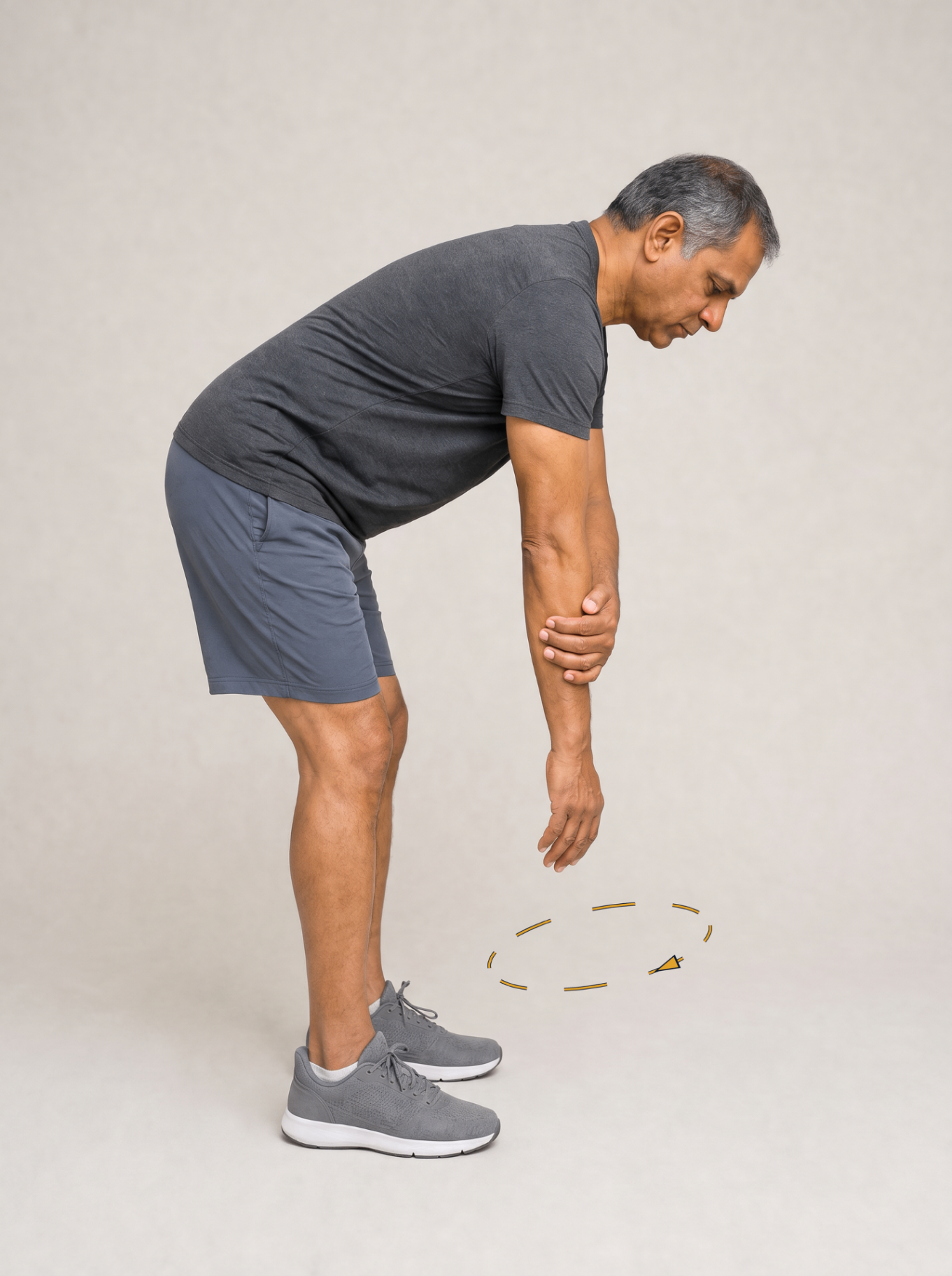
Passive shoulder pendulum
Shoulder
Bend forward at the hips and support yourself with the good arm on a table. Let the sore arm hang completely relaxed, then shift your body weight to swing it in small circles and side to side. The arm should not work at all. 30–60 seconds each direction, several times a day.
Swing
Body moves, arm hangs loose — the shoulder muscles stay switched off.
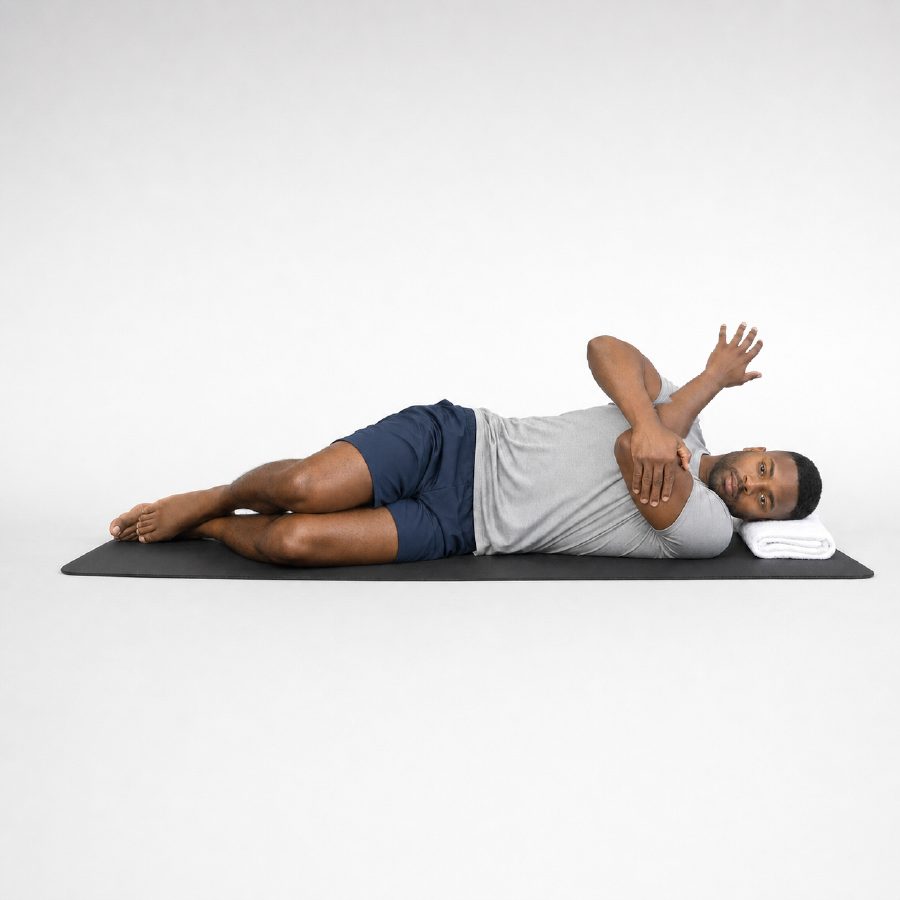
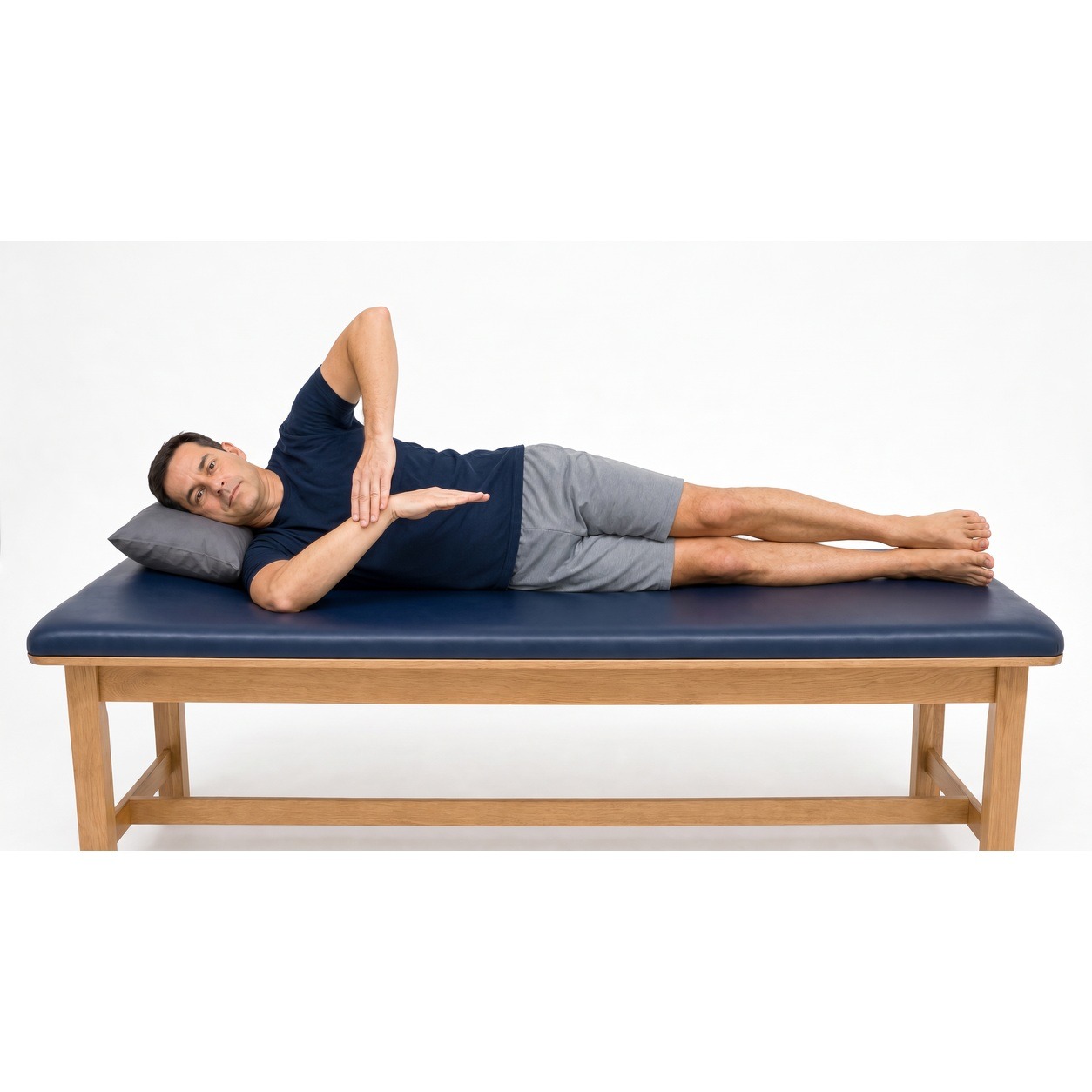
Cross-body stretch (side lying)
Shoulder
Lie on your side with the affected arm underneath. Use your top hand to gently draw the arm across your chest until you feel a stretch behind the shoulder. Hold 30 seconds, repeat 3 times.
Hold
Draw the arm across the chest, elbow soft, no shrugging.
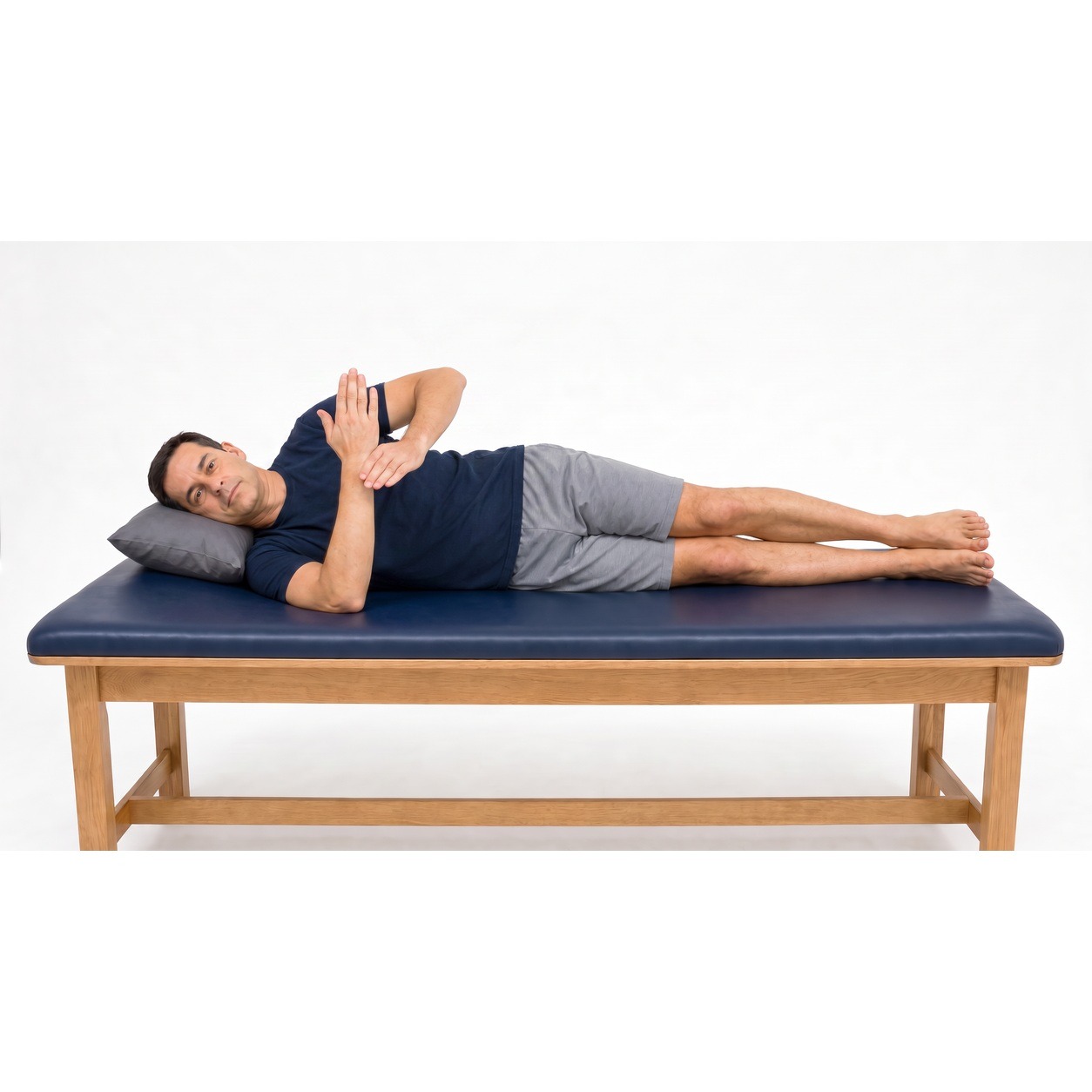
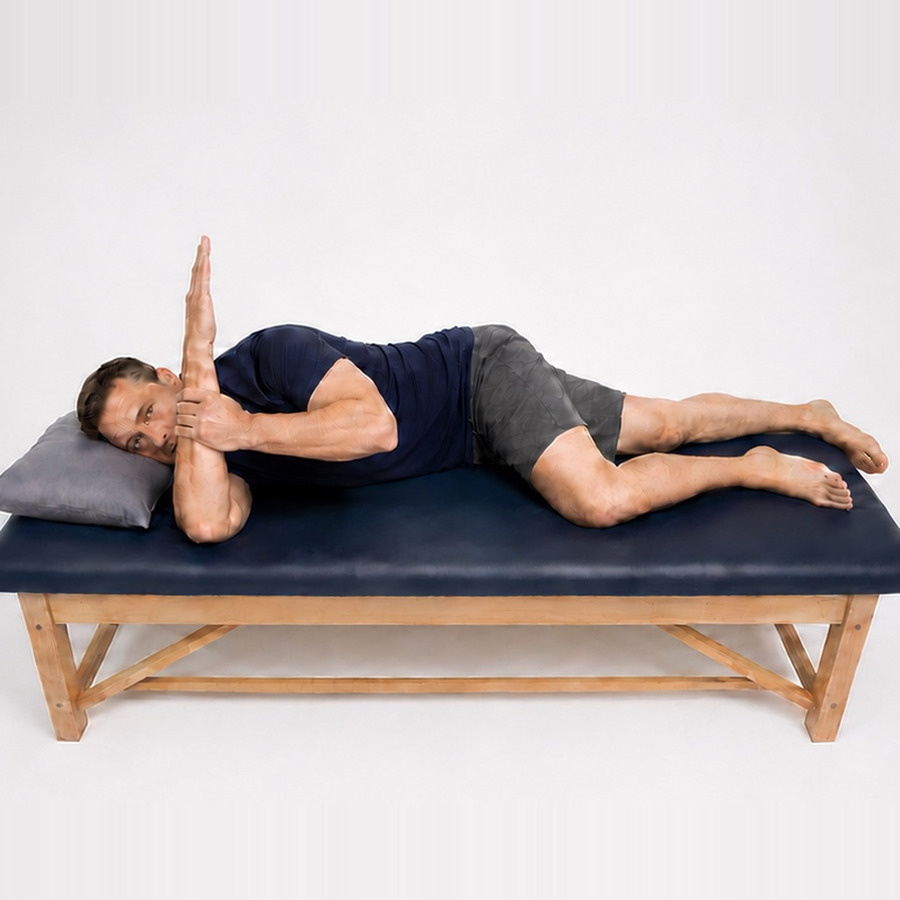
Sleeper stretch
Shoulder
Lie on the affected side with the elbow bent to 90°. Use the top hand to slowly rotate the forearm down toward the table. Stop at a gentle stretch, never pain. Hold 30 seconds, repeat 3 times.
Start
Forearm upright, shoulder blade tucked against the table.
Finish
Gently rotate the forearm toward the table and hold.
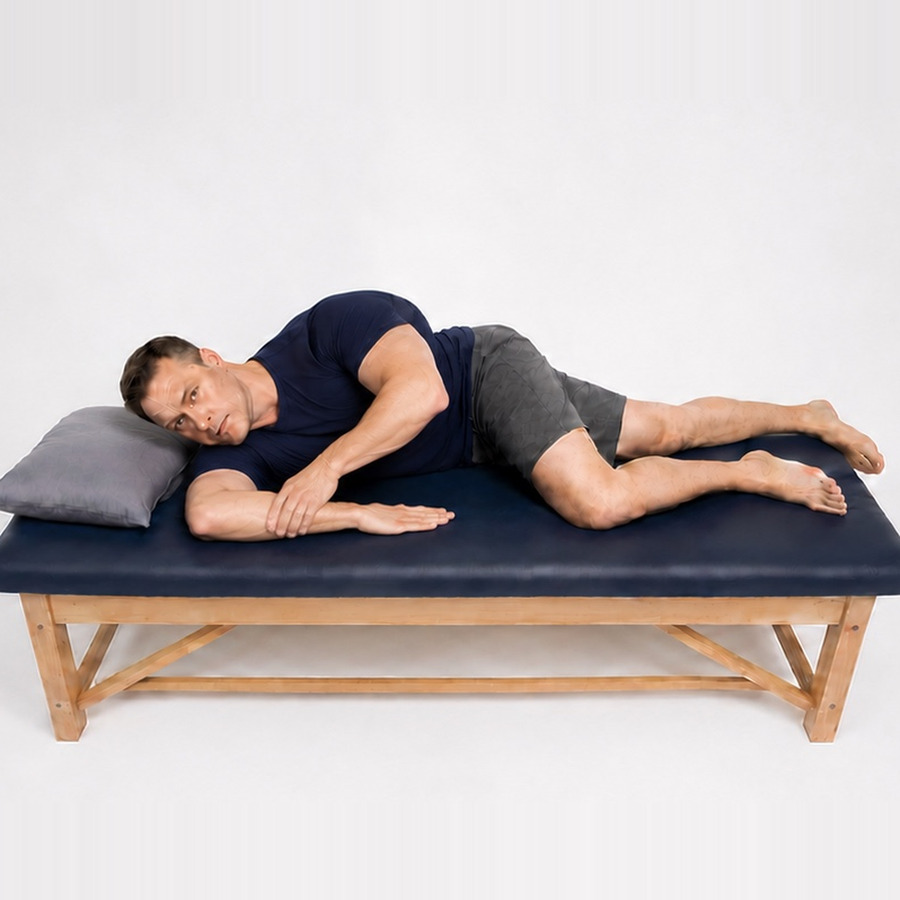
Rollover stretch
Shoulder
Start on your side with the arm out in front, then roll your body slightly over the arm to increase the stretch through the back of the shoulder. Hold 30 seconds, repeat 3 times.
Start
Arm forward on the table, body stacked on the side.
Finish
Roll partly onto the arm until the stretch is felt, then hold.
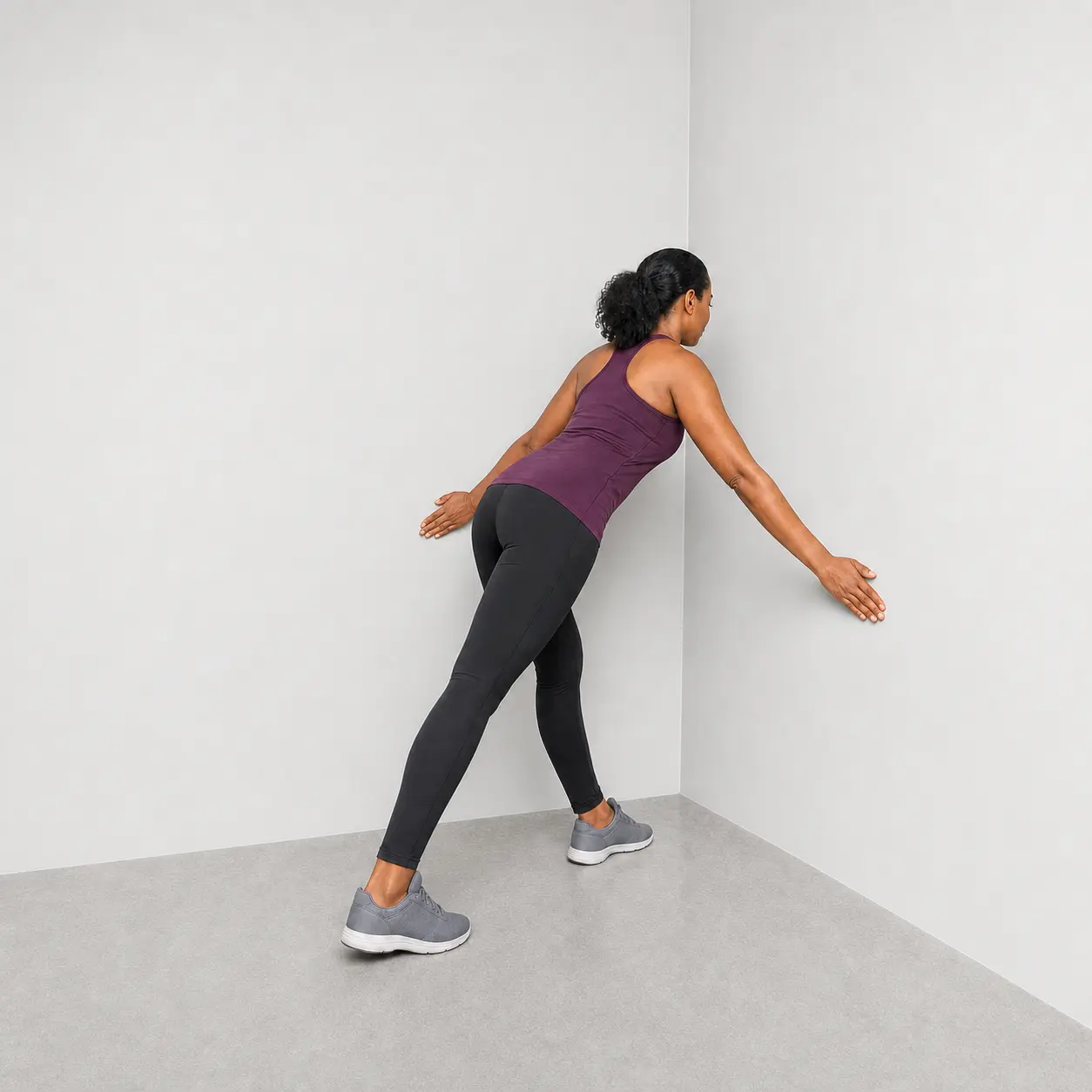
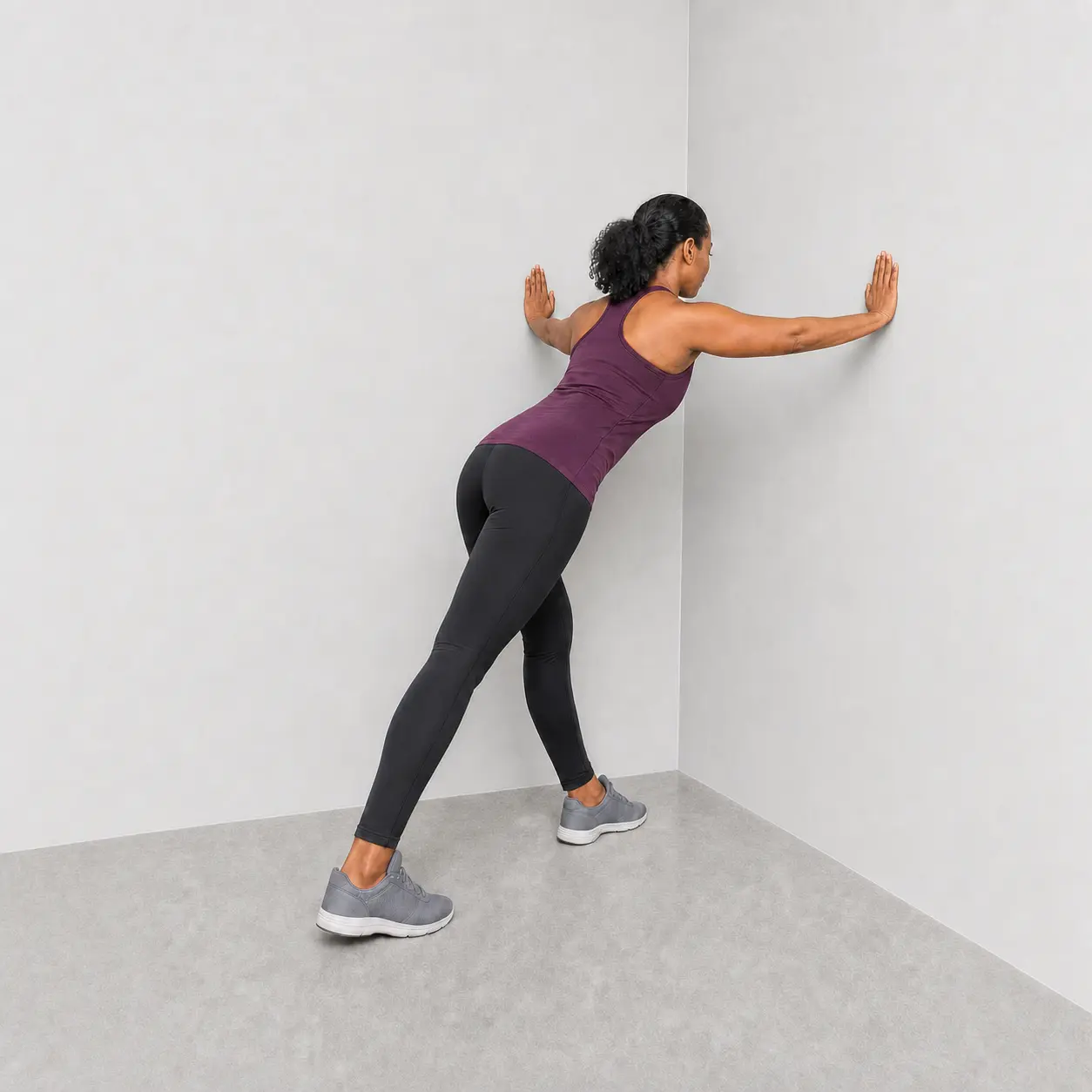
Corner stretch
Shoulder
Stand facing a corner with your forearms on each wall. Lean gently into the corner until you feel a stretch across the chest and front of the shoulders. Hold 30 seconds, repeat 3 times. Two hand positions target different fibers — start low, then raise the arms.
Method A — hands low
Hands below shoulder height, step in and lean gently forward.
Method B — hands higher
Hands above shoulder height shifts the stretch lower across the chest.
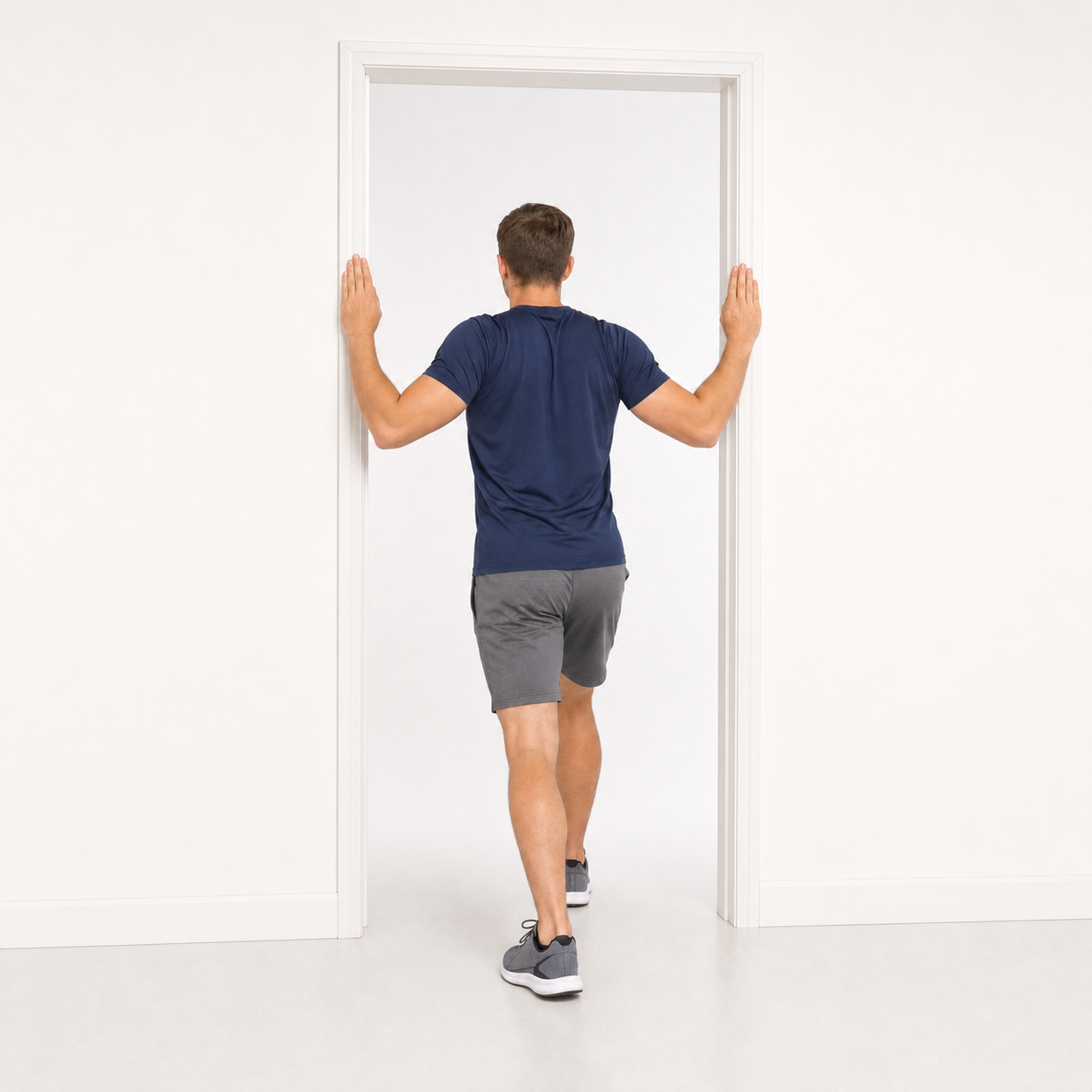
Doorway pec stretch
Shoulder
Stand in a doorway with your forearms on the frame, elbows at shoulder height. Step one foot through and gently lean forward until you feel a stretch across the chest. Hold 30 seconds, repeat 3 times.
Hold
Elbows at shoulder height, step through and lean — no pinching in the shoulder.
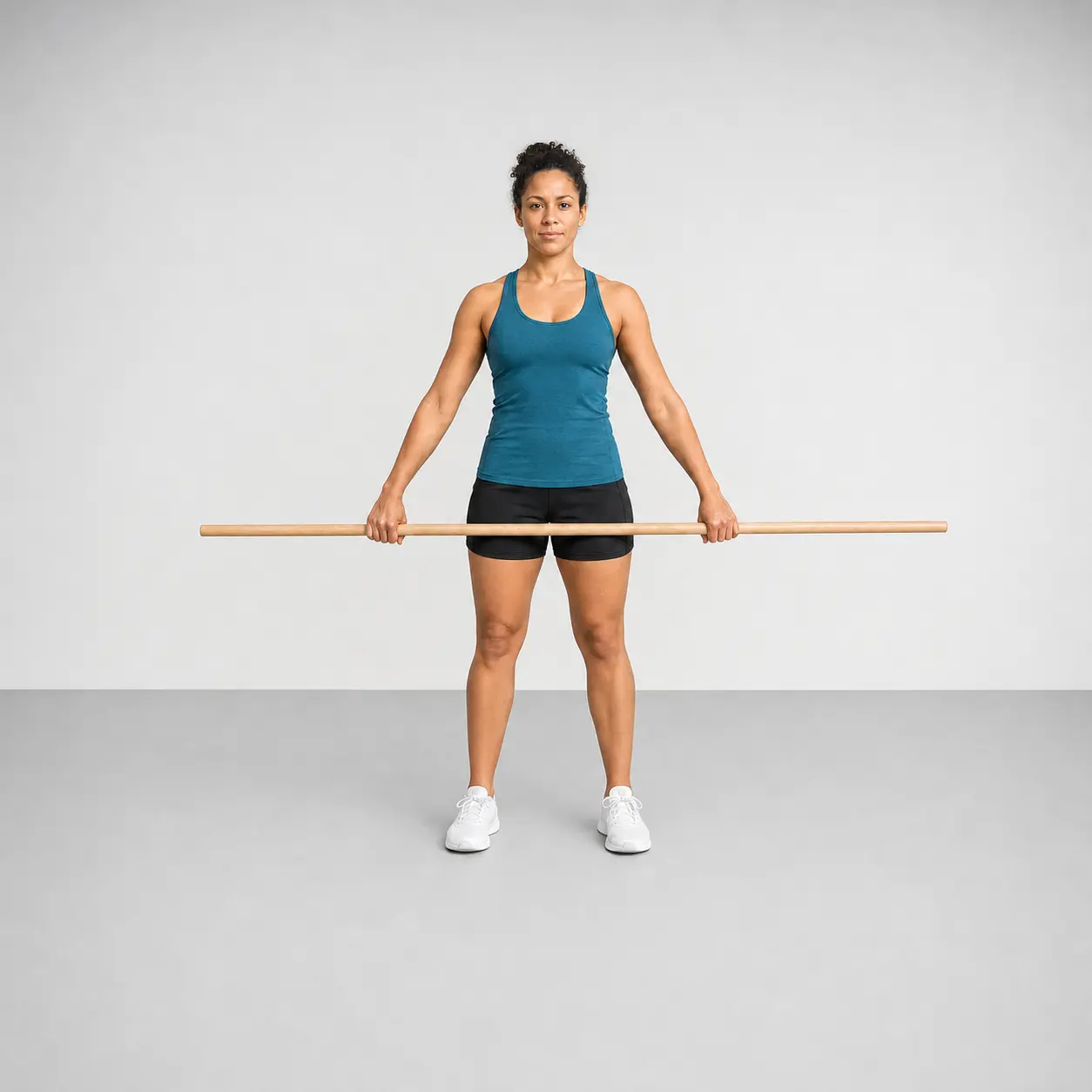
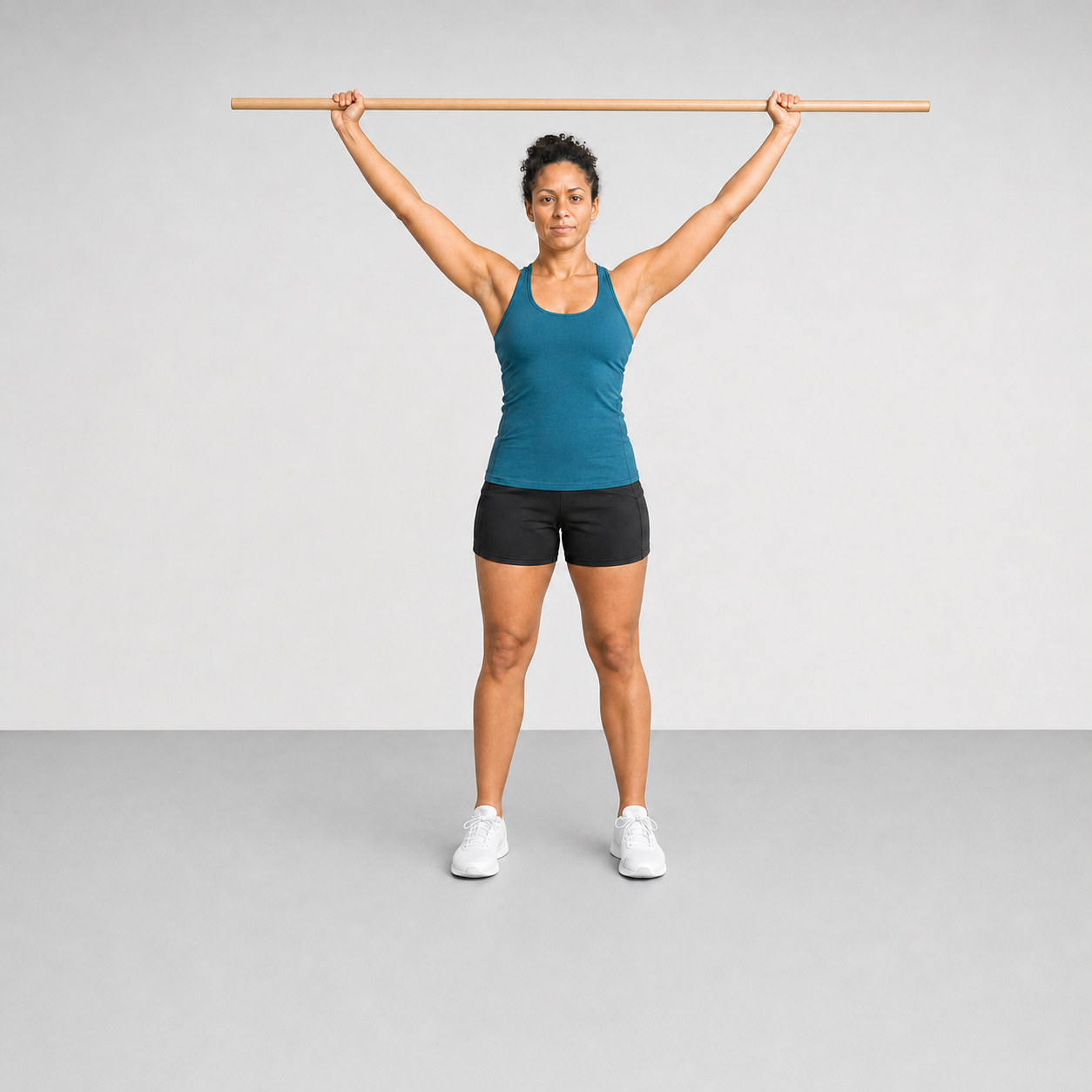
Dowel pass-through
Shoulder
Hold a dowel or broomstick with a wide grip in front of your thighs. Keeping the arms straight, slowly raise it overhead and as far behind as is comfortable, then return. Move slowly and never force it. 10 slow repetitions.
Start
Wide grip, arms straight, dowel resting in front of the thighs.
Overhead
Raise smoothly overhead; widen the grip if the shoulders pinch.
Wall shoulder slide
Shoulder
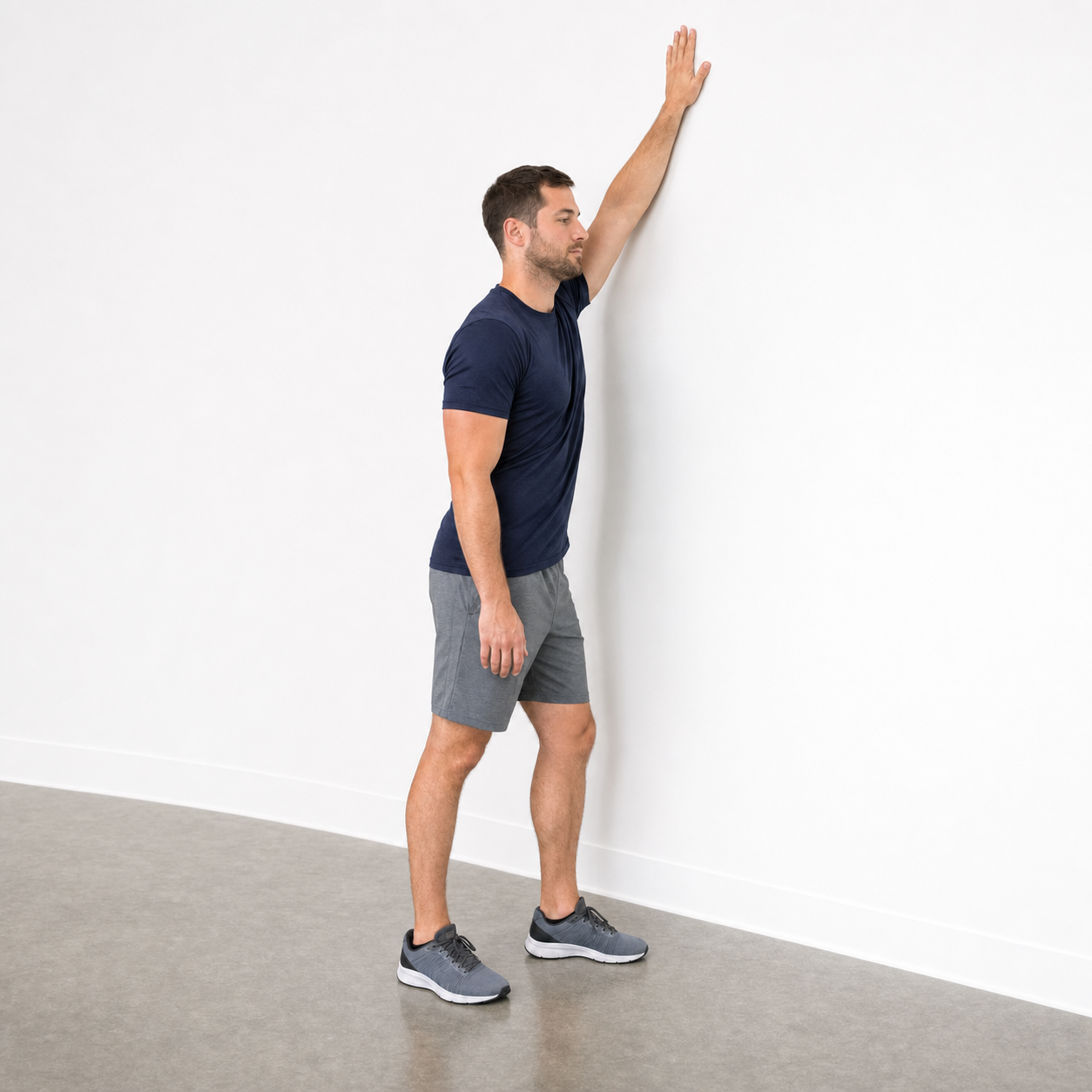
Stand facing a wall and place the palm of the affected arm on it. Slowly walk the hand up the wall, leaning in as you go, until you feel a gentle stretch. Hold briefly, then walk back down. Repeat 10 times.
Hold
Walk the fingers upward and lean in — let the wall do the lifting.
Forearm extensor stretch (tennis elbow)
Elbow · Wrist
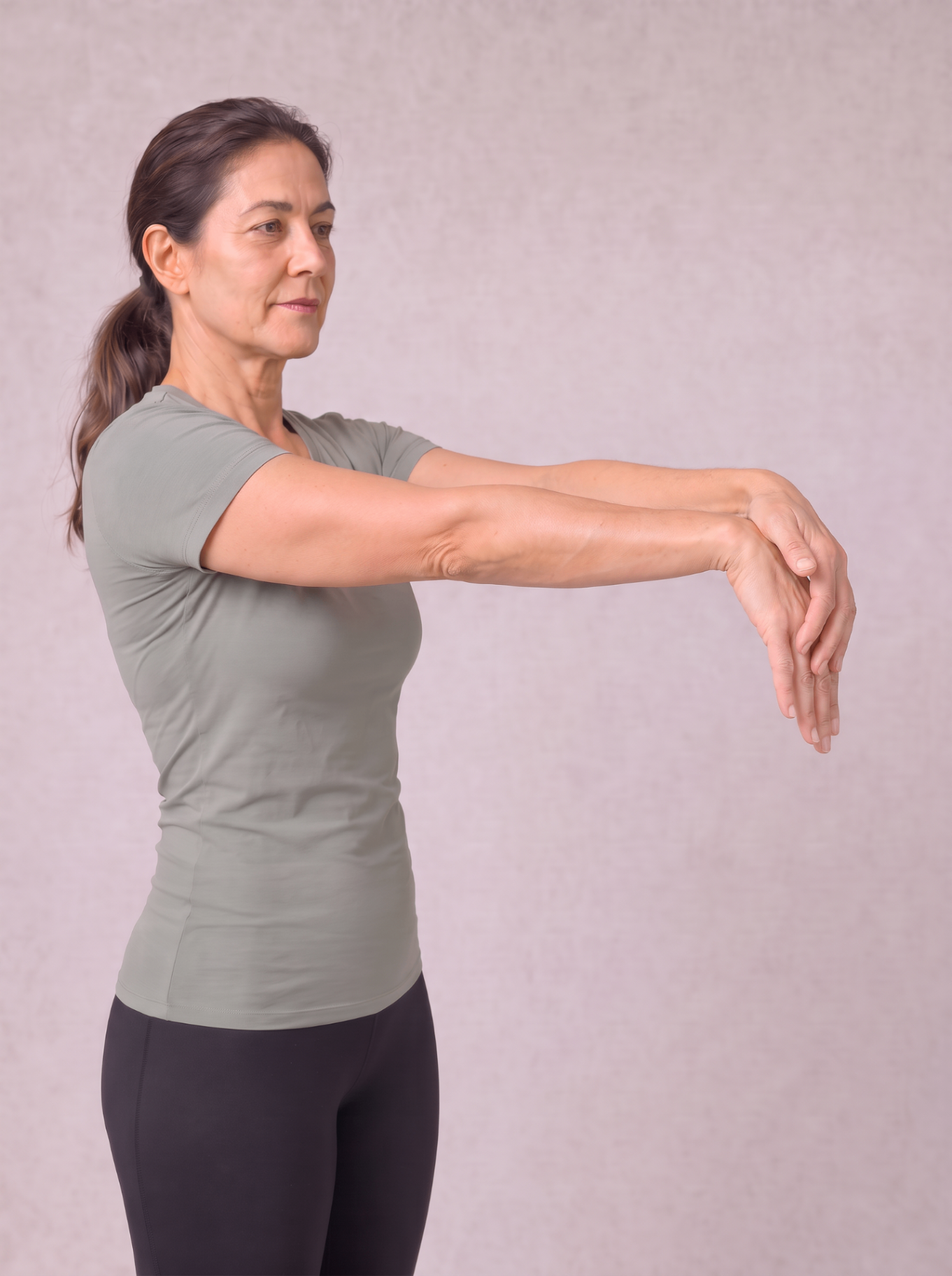
Straighten the arm out in front with the elbow locked and the palm facing down. Let the wrist drop, then use the other hand to draw the fingers gently further down until you feel a stretch along the top of the forearm. Hold 30 seconds, repeat 3 times.
Hold
Elbow straight, palm down, wrist dropped — stretch felt on top of the forearm.
Forearm flexor stretch (golfer's elbow)
Elbow · Wrist
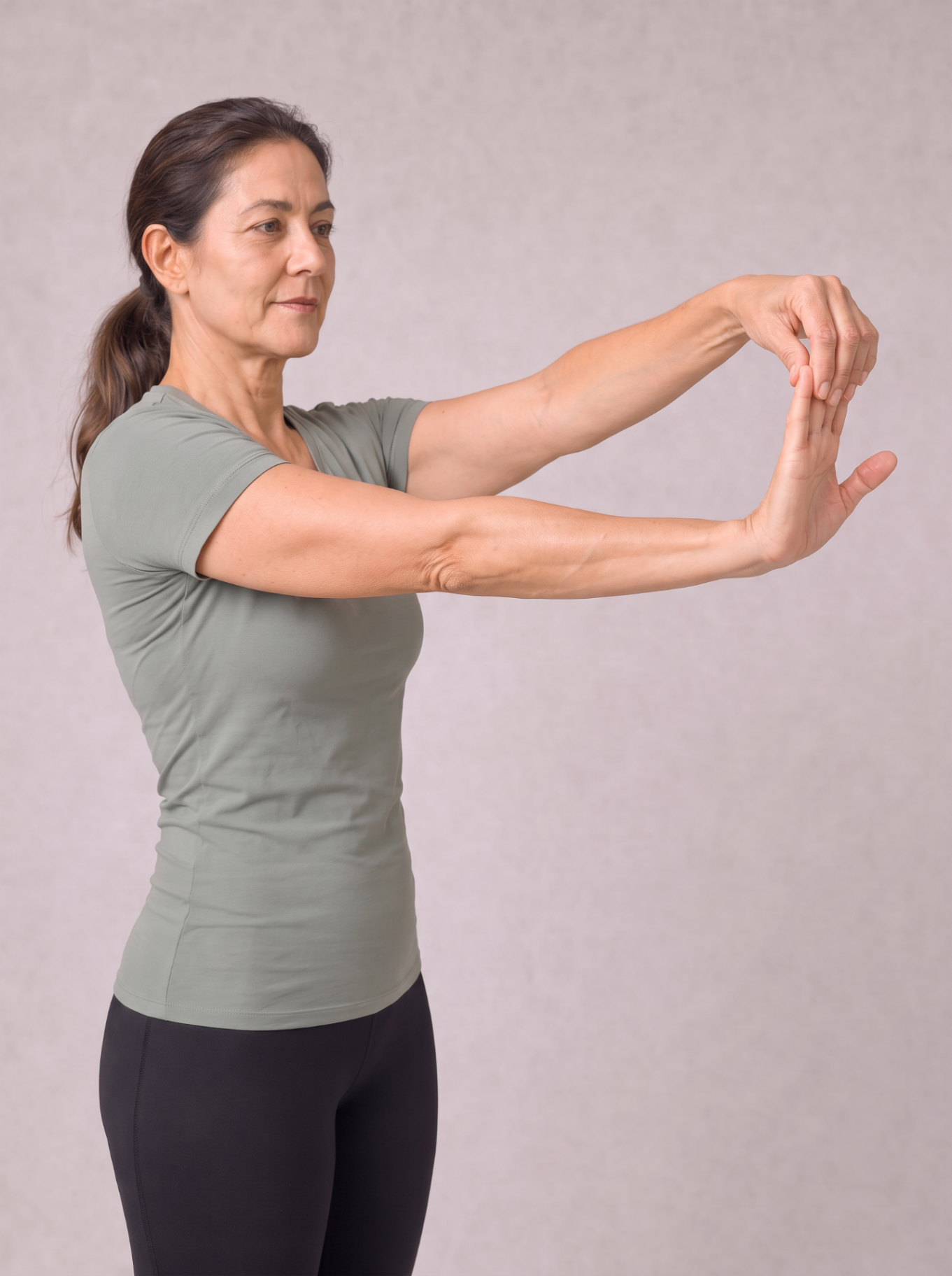
Straighten the arm out in front with the elbow locked and the palm facing away. Draw the fingers back with the other hand until you feel a stretch along the underside of the forearm. Hold 30 seconds, repeat 3 times.
Hold
Elbow straight, palm forward, fingers eased back — stretch under the forearm.
Seated low back stretch
Back · Hip
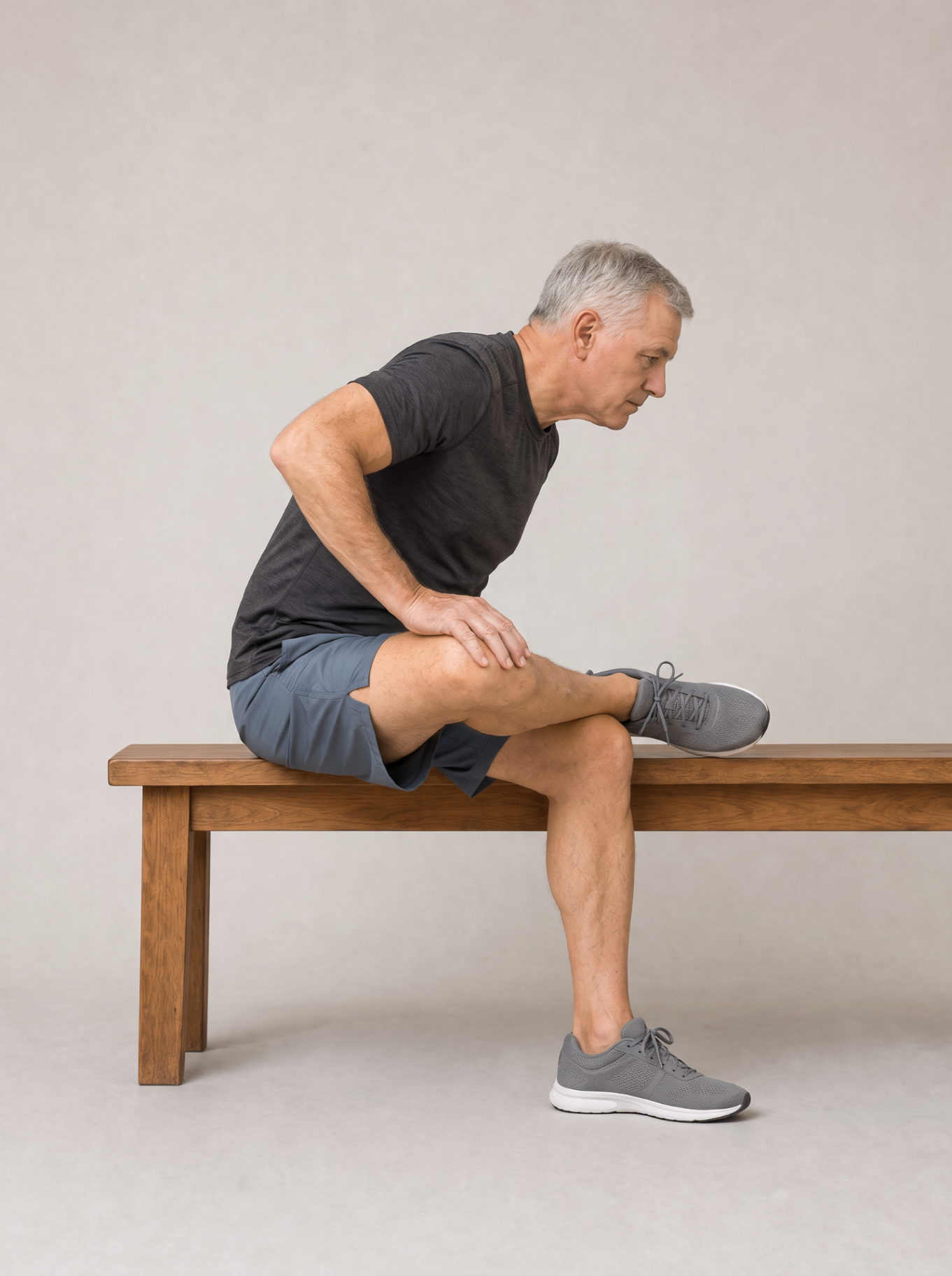
Sit tall on a firm bench or chair, cross one ankle over the opposite knee, then hinge gently forward from the hips with the back long. You should feel it through the low back and outer hip. Hold 30 seconds, repeat 3 times each side.
Hold
Hinge from the hips, keep the back long — no rounding or bouncing.
Quadratus lumborum side bend
Back
Stand tall with the feet hip-width apart. Reach one arm overhead and lean slowly to the opposite side, keeping both feet planted and the hips level, until you feel a stretch along the side of the low back. Hold 20–30 seconds, repeat 3 times each side.
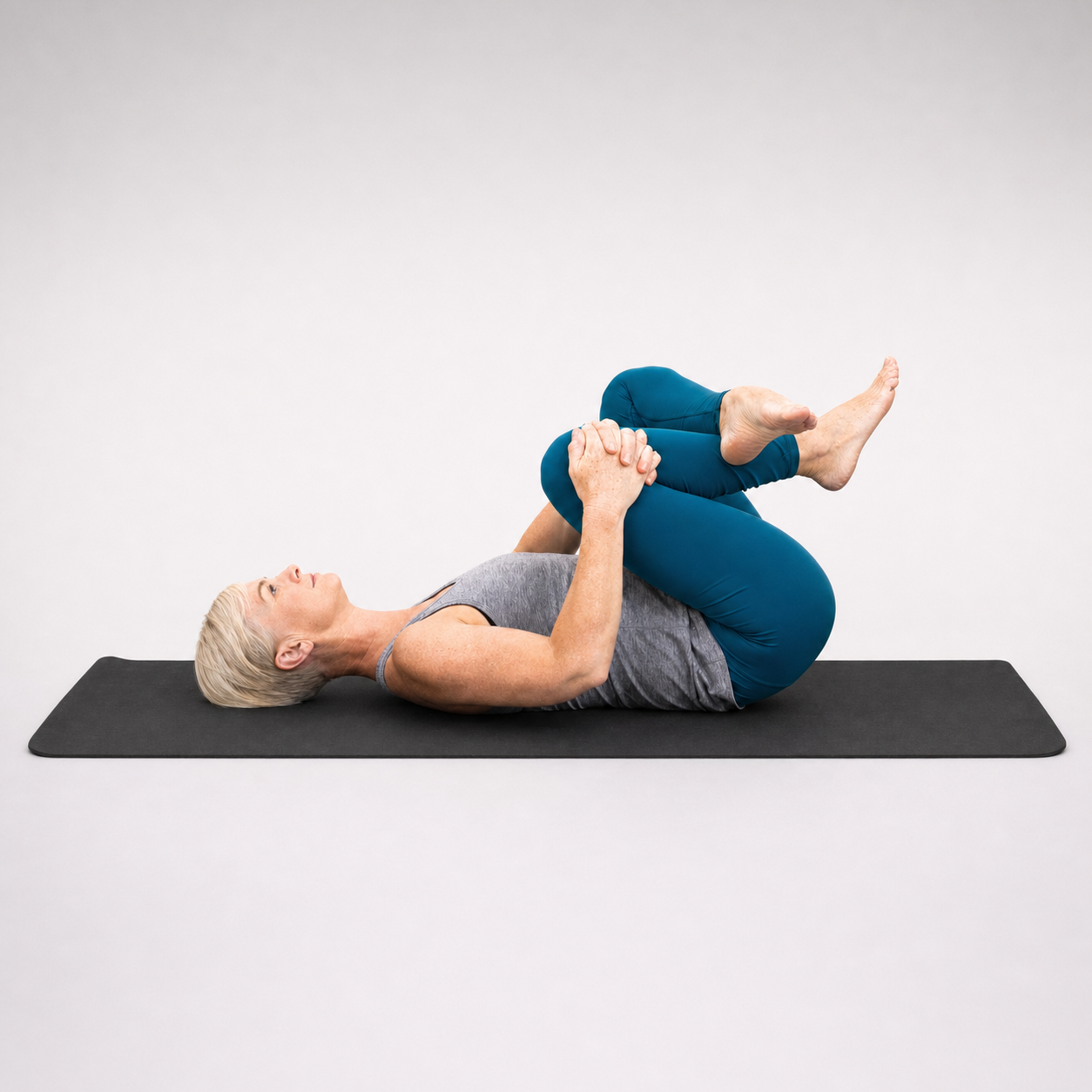
Figure-4 stretch (hip)
Hip
Lie on your back and cross the ankle over the opposite knee. Draw the uncrossed thigh toward your chest until you feel a stretch deep in the hip and buttock. Hold 30 seconds, repeat 3 times each side.
Hold
Ankle over the opposite knee, hands behind the thigh, draw gently in.
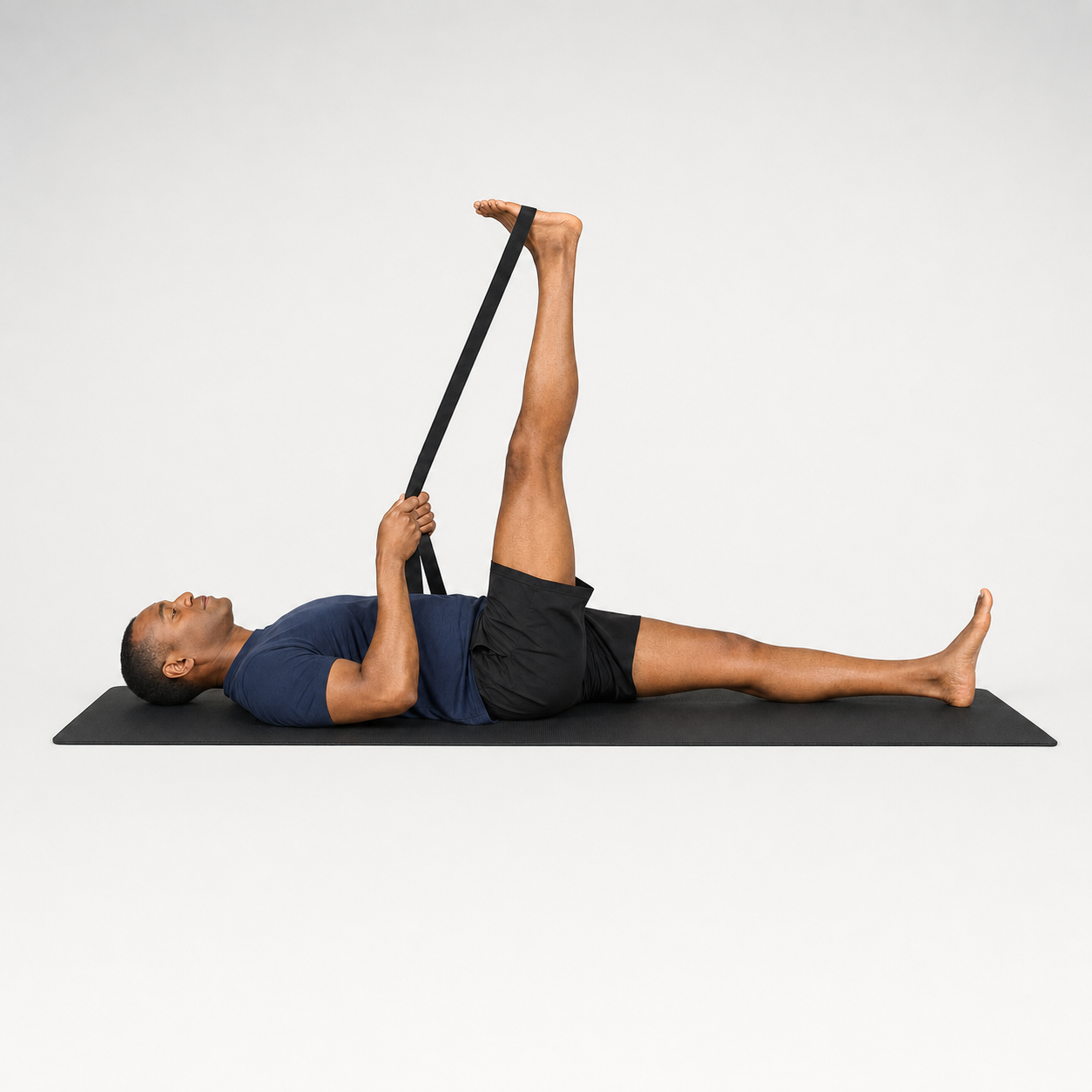
Hamstring stretch with strap
Hip · Knee
Lie on your back with a strap or belt around your foot. Keeping the knee straight, gently raise the leg until you feel a stretch along the back of the thigh. Hold 30 seconds, repeat 3 times each side.
Hold
Knee straight, opposite leg flat, pull only to a gentle stretch.
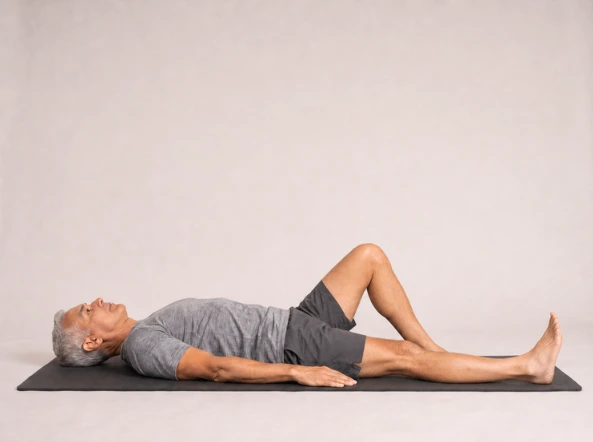
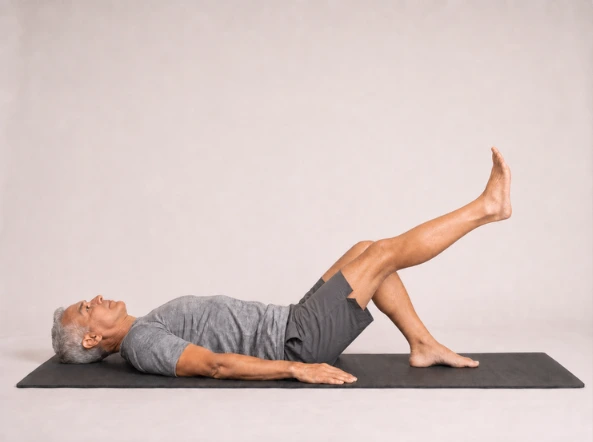
Straight leg raise
Knee
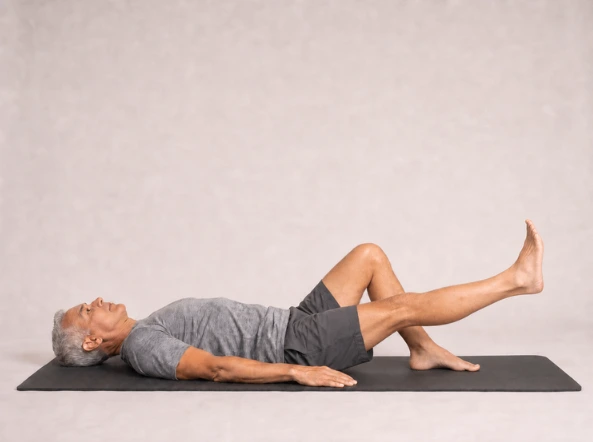
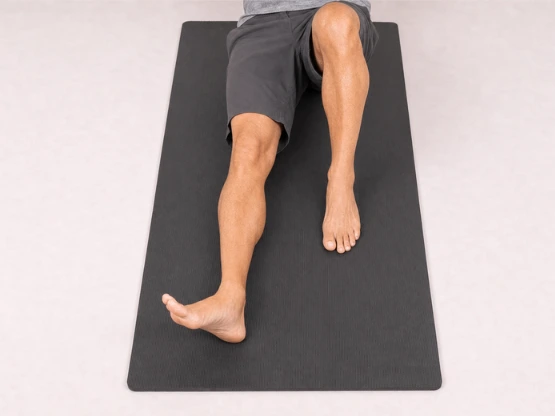
Lie on your back with one knee bent and that foot flat. Keep the other leg straight, tighten the thigh, and pull the toes up toward the shin. Raise the straight leg until it is parallel with the bent thigh, pause 1–2 seconds, lower halfway and pause, drive back up and pause, then lower all the way down. 10 repetitions, 2–3 sets. For the standard method the toes point straight up; turning the whole leg outward from the hip so the toes point away shifts the work to the inner quadriceps.
1 · Start
Keep one knee bent and that foot flat. Tighten the straight leg’s thigh and pull the toes up toward the shin.
2 · Raise and pause
Lift until the straight leg is parallel with the bent thigh. Pause for 1–2 seconds.
3 · Halfway and return
Lower halfway and pause. Raise back up and pause, then lower fully to the mat. That completes one repetition.
Variation · Toes out
Turn the whole straight leg outward from the hip so the kneecap and toes turn together. Keep the knee straight; do not roll the ankle inward. Repeat the same sequence.
Standing calf stretch
Ankle
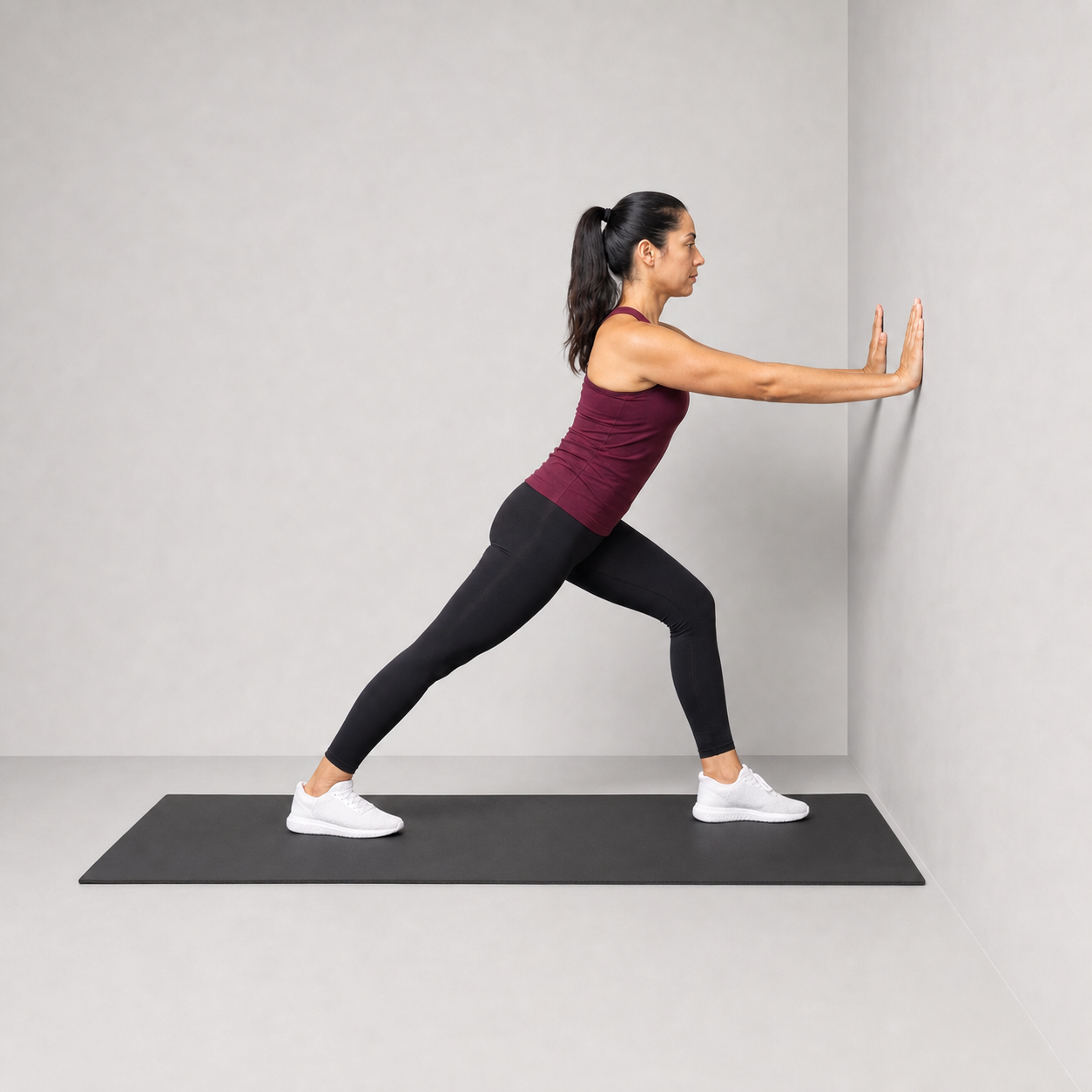
Face a wall with hands on it. Step one leg back, heel down and knee straight, and lean forward until you feel a stretch in the calf. Hold 30 seconds, repeat 3 times each side.
Hold
Back heel flat on the floor, knee straight, lean into the wall.
Ankle alphabet
Ankle
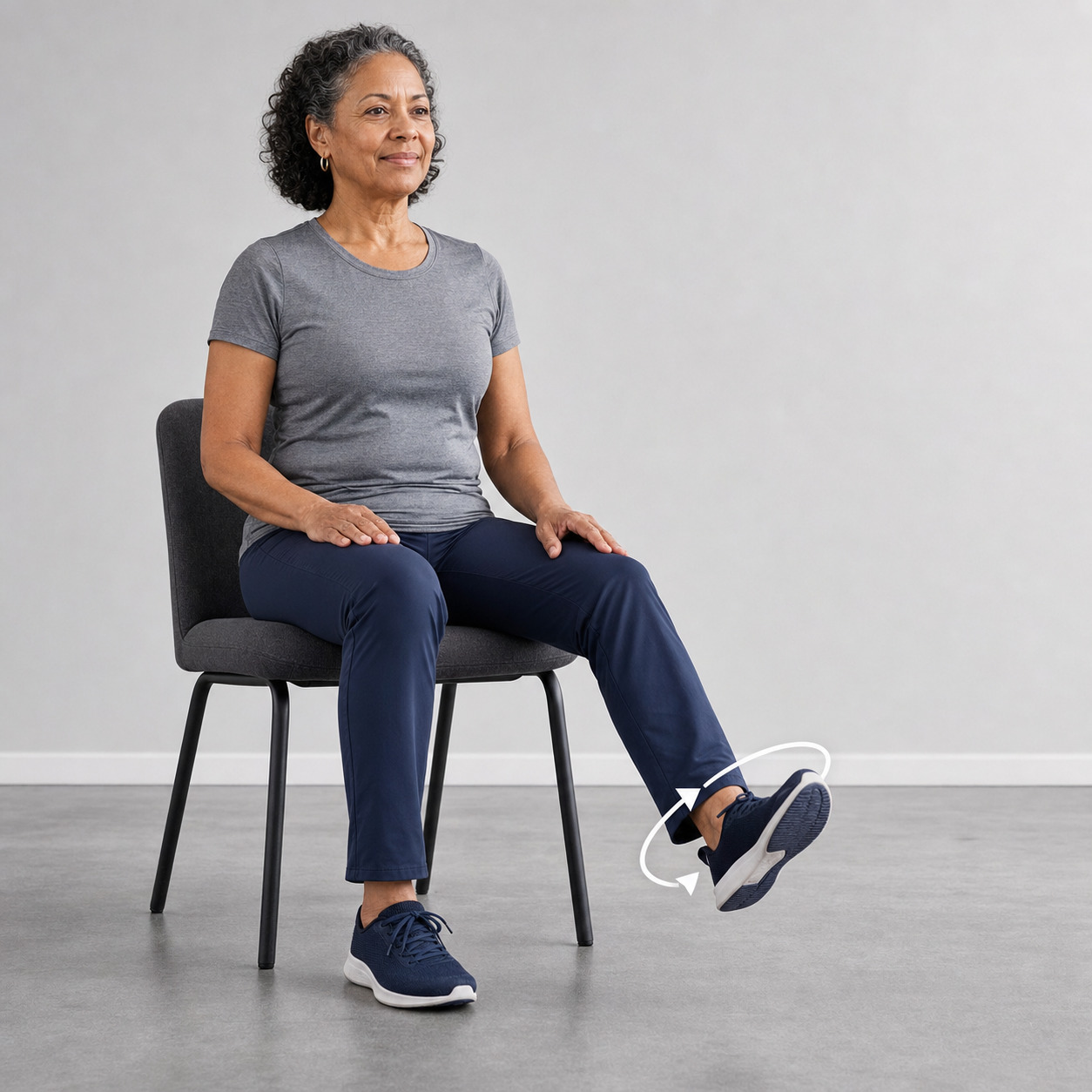
Sit with the foot lifted off the floor. Using the foot alone — not the whole leg — slowly trace each letter of the alphabet in the air. Move through as much range as is comfortable. Once or twice through, two to three times a day.
Move
Keep the knee still; the motion comes from the ankle only.
These exercises provide general education and do not replace an examination, diagnosis, or a program prescribed specifically for you.
Ready to talk it through?
Education is a starting point. An exam with Dr. Woolf is how we find the right plan for you — starting with conservative care.